NAS vs SAN: A Comparison of Storage Architectures
Data volumes in organisations are expanding rapidly. What strategies are needed to ensure that users and systems can consistently access all information? For network-based storage, two architectures – NAS and SAN – have proven themselves, each with unique strengths and weaknesses.
Digital workflows are accelerating the surge in data across organisations, as not only people and applications but also AI-based bots, sensors, and machines generate increasing amounts of data. Storing this data is becoming more complex – not only because all information must be stored reliably and cost-effectively, but also it must remain accessible for users and systems. If access is disrupted, such as by storage failures or congested connections, critical processes may come to a standstill, often with far-reaching consequences for reputation and revenue.
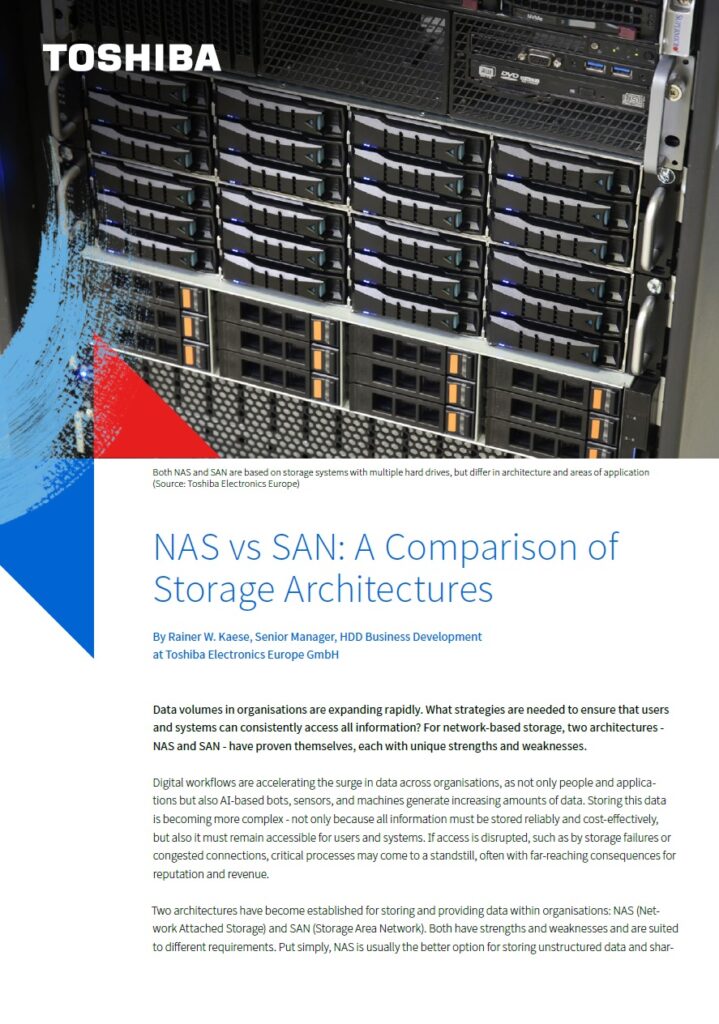
Two architectures have become established for storing and providing data within organisations: NAS (Network Attached Storage) and SAN (Storage Area Network). Both have strengths and weaknesses and are suited to different requirements.
Read the whole article for an in-depth comparison here.
Rainer W. Kaese, Senior Manager Business Development Storage Products at Toshiba Electronics Europe